

This article discusses optimizing application performance by managing String allocations in Java. It explains how to avoid excessive memory use through techniques like String literals, the String.intern() method, and the Java String deduplication feature. The importance of proper parameter settings and performance evaluation is emphasized for effective memory management.
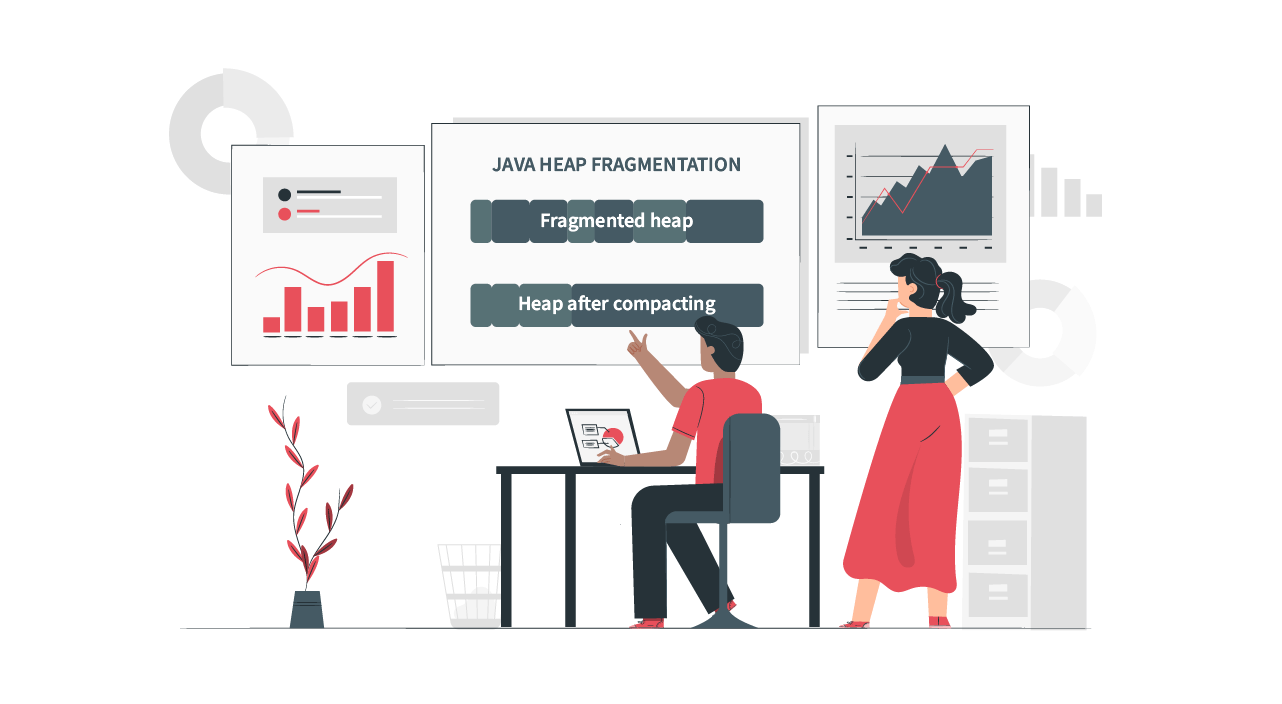
Java Heap fragmentation is an interesting problem, which triggers long pausing full garbage collection cycles. In this article we would like to attempt to explain the heap fragmentation.

we are noticing several java applications still continuing to use '-XX:+UseCompressedOops' JVM argument.

The Covid-19 pandemic has caused significant global economic damage, leading to the worst US stock market crash since 1987. In a brief interview, architect Ram Lakshmanan discusses strategies for enterprises to reduce IT spending by 20-30% without resorting to layoffs, emphasizing the need for financial planning during uncertain times.

A study on the Spring Boot Pet Clinic application revealed significant memory wastage, with 65% of memory used inefficiently due to duplicate strings and improper collection implementation. This inefficiency can escalate cloud computing costs, as memory saturation often occurs before other resources. Writing memory-efficient code could significantly reduce operational costs and enhance customer experience.

A web application's memory optimization attempt revealed disappointing results. Despite using JVM arguments '-XX:+UseG1GC' and '-XX:+UseStringDeduplication', no reduction in memory usage was observed. The application's short-lived string objects led to negligible duplicate strings being eliminated, highlighting the need for code refactoring to prevent duplicate string creation and improve memory efficiency.